
“NEP 2026” policy focus on implementing National Education Policy (NEP) 2020, with 2026 seeing pushes for higher budget allocation (6% of GDP), reforms in teacher training (NPST), integrating skill-based learning, completing board reforms (CBSE by 2025-2026), and strengthening digital infrastructure for a knowledge economy, building on NEP 2020’s 5+3+3+4 structure.

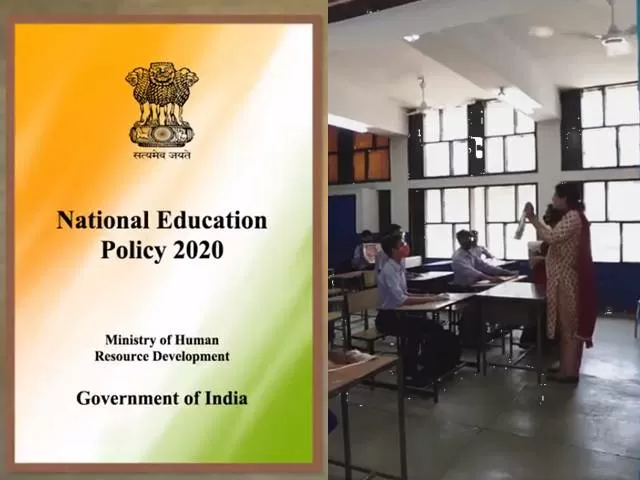
Key Focus Areas for 2026 & Beyond:
- Fiscal Push: Stakeholders are urging higher Union Budget allocation for education, aiming for 6% of GDP, to fund infrastructure, teacher capacity, and technology.
- Teacher Development: Implementing the National Professional Standards for Teachers (NPST) for better teacher training is a key goal.
- Curriculum & Skills: Shifting towards competency-based, skill-based, and mother tongue instruction, focusing on holistic development and job creation.
- Digital Infrastructure: Expanding platforms like DIKSHA, SWAYAM, and ensuring inclusive EdTech adoption.
- Board Reforms: Completing CBSE reforms by the 2025-2026 academic year.
- Higher Education: Promoting research, international collaboration, and industry-aligned practical learning to meet 4th Industrial Revolution needs.
Underlying Structure (NEP 2020):
- 5+3+3+4 System: Replaces 10+2, focusing on ages 3-18 with a foundation stage (5 yrs), preparatory (3 yrs), middle (3 yrs), and secondary (4 yrs).
[1] https://www.21kschool.com/in/blog/national-education-policy/
[5] https://www.21kschool.com/ae/blog/national-education-policy/
[6] https://www.extramarks.com/blogs/schools/fundamental-principles-of-nep-2020/
[7] https://www.education.gov.in/en/nep/academic-research-internationalization
[10] https://www.21kschool.com/ma/blog/national-education-policy/